What Is Red Light Therapy?
Red light therapy has become one of the most requested wellness technologies in the country. The science is straightforward even if the glow looks futuristic: yes, there is a real reason the light is red.
Key Points
- Uses specific red and near-infrared wavelengths
- Light is absorbed by cells and supports energy production
- Comfortable, painless, non-invasive sessions
- Used for recovery, skin health and general wellness
- Consistency beats intensity
What Red Light Is
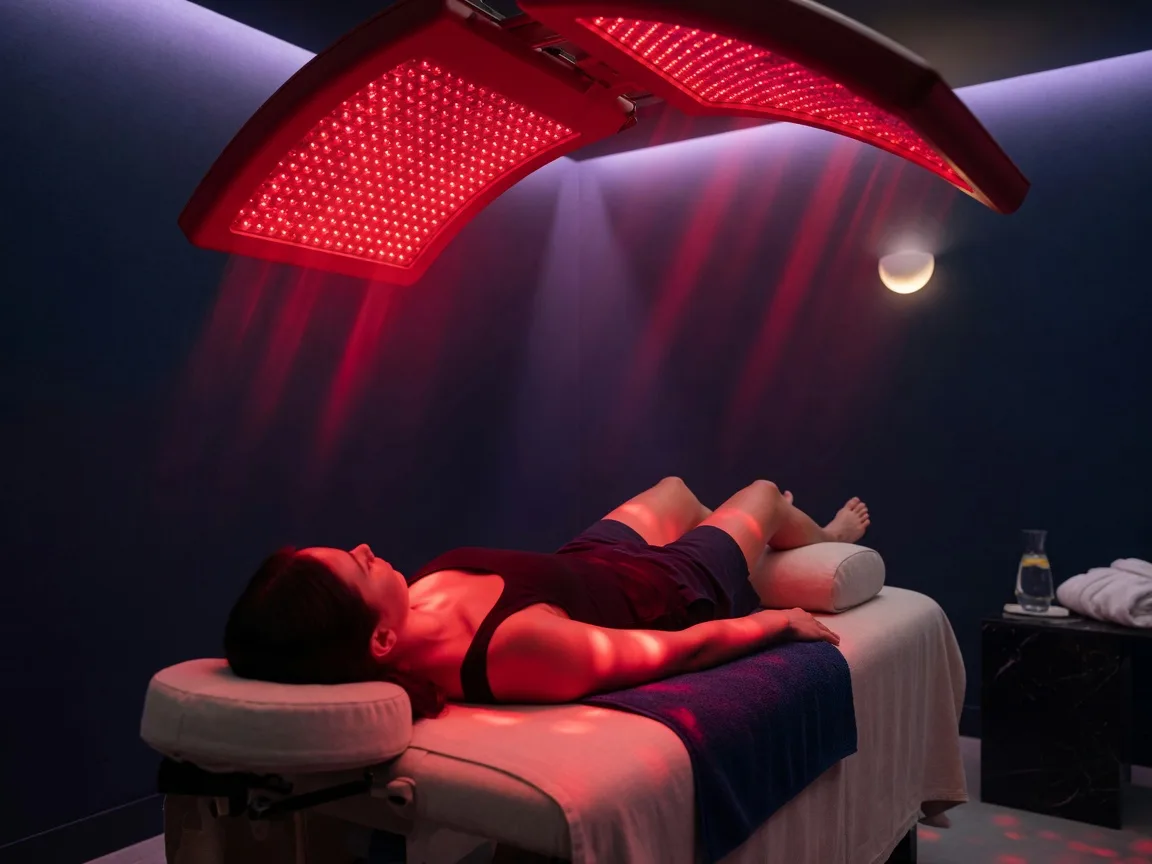
Red light therapy delivers specific wavelengths of red and near-infrared light through LED panels or pads. The wavelengths matter: they are selected because cells absorb them and use them to support their own energy production.
How It Works at the Cellular Level
Inside your cells, mitochondria act as tiny power plants. When they absorb red and near-infrared light, they can produce energy more efficiently. With more cellular energy available, recovery, repair and general wellness have more fuel to work with.
Common Uses
People use red light therapy to support recovery after workouts, skin tone and texture, cellular energy and everyday wellness. It can be a gentle, habitual tool, like a daily vitamin, but delivered as light.
What to Expect
Sessions are simple: you relax while light panels direct targeted wavelengths at the area being treated. Most people feel nothing beyond gentle warmth. Because results build gradually, a consistent schedule, customized for you, is the winning approach.
Want to Explore This Further?
This article is part of the Thrive EECP Health Library in Draper, Utah. If the topic above sounds relevant to you, the next step is a free, no-pressure conversation about your goals.
About the Author
This article was authored and curated by Phil Kim for the Thrive EECP Health Library, with content guidance from the Thrive team. It is educational information, not medical advice, and does not create a patient relationship. Always consult a qualified healthcare professional about your health.