
How Does EECP Work? The Mechanics of Counterpulsation
Every technology sounds complicated until someone explains the mechanism clearly. EECP is actually elegant in its simplicity: the machine watches your heartbeat, then acts at exactly the right moment. Here is how it works.
Key Points
- Sensors track your cardiac cycle in real time
- Cuffs inflate during the resting phase of your heartbeat
- Cuffs release just before your heart contracts
- The result is designed to support blood flow with less strain
- Decades of research, including MUST-EECP, document the approach
The Timing Is Everything
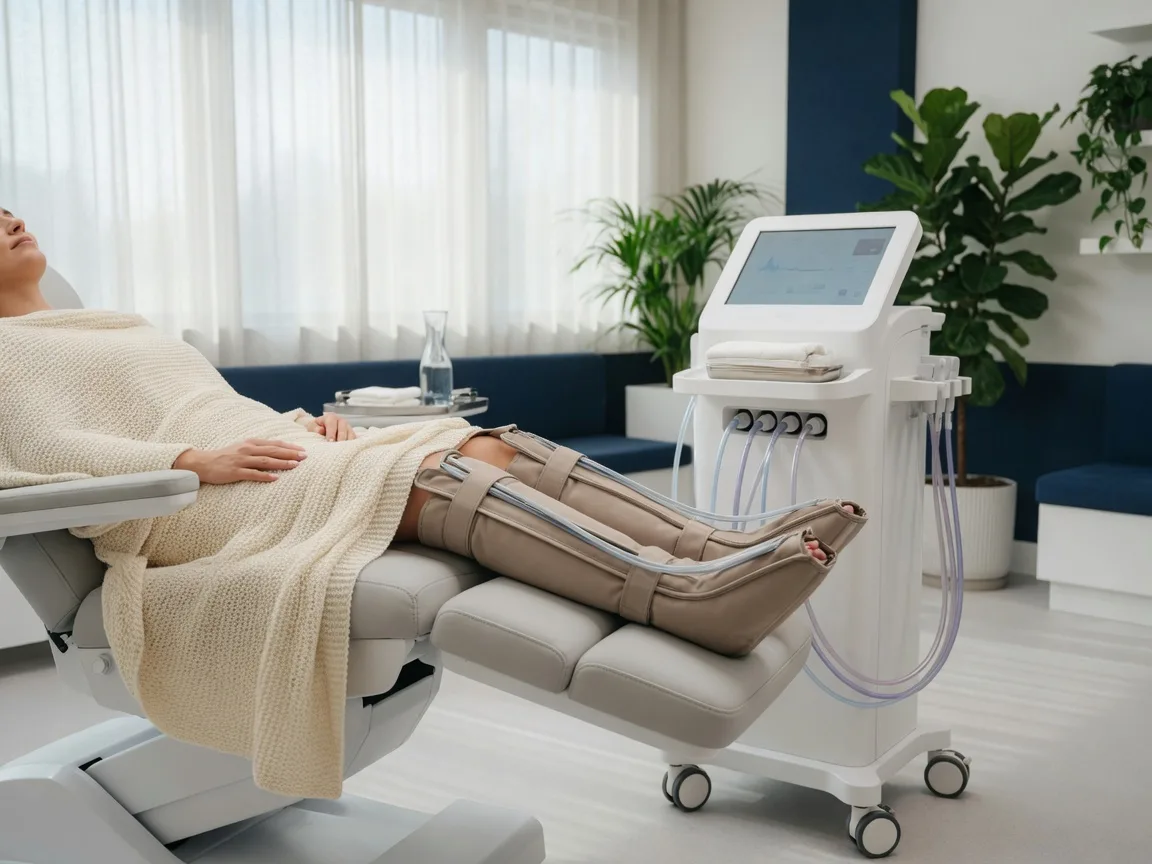
Your heart spends part of each beat resting and filling, and part contracting to pump blood. During the resting phase, the EECP cuffs inflate, gently squeezing the calves, thighs and hips. That squeeze pushes blood from the lower body back toward the heart.
Just before your heart contracts, the cuffs rapidly release all at once. That sudden release drops the pressure on the aorta at the exact moment the heart is working hardest, reducing the workload.
Two Supports in One Motion
The same cycle does two things: it increases blood returning to the heart (venous return) and it creates a brief, powerful increase in blood flow (diastolic augmentation). Over a course of sessions, this repeated, coordinated support is designed to encourage the body's natural vascular response.
Think of it as a gentle, rhythmic workout for your circulatory system, delivered while you rest.
What the Research Shows
The MUST-EECP trial, a randomized sham-controlled study published in the Journal of the American College of Cardiology, found significant reductions in anginal episodes and improved exercise tolerance. The PEECH trial studied patients with heart failure and found improved exercise time and quality of life.
Our research library organizes these and other studies by topic, each linked to its primary source. Read them yourself, then bring your questions to a consultation.
The Takeaway
EECP is non-invasive, heartbeat-synchronized and backed by serious research. It is not a cure for heart disease, and it requires a professional evaluation first, but for the right person it can be a meaningful part of a circulation-supporting plan.
Want to Explore This Further?
This article is part of the Thrive EECP Health Library in Draper, Utah. If the topic above sounds relevant to you, the next step is a free, no-pressure conversation about your goals.
About the Author
This article was authored and curated by Phil Kim for the Thrive EECP Health Library, with content guidance from the Thrive team. It is educational information, not medical advice, and does not create a patient relationship. Always consult a qualified healthcare professional about your health.