Red Light Therapy: What the Research Really Shows
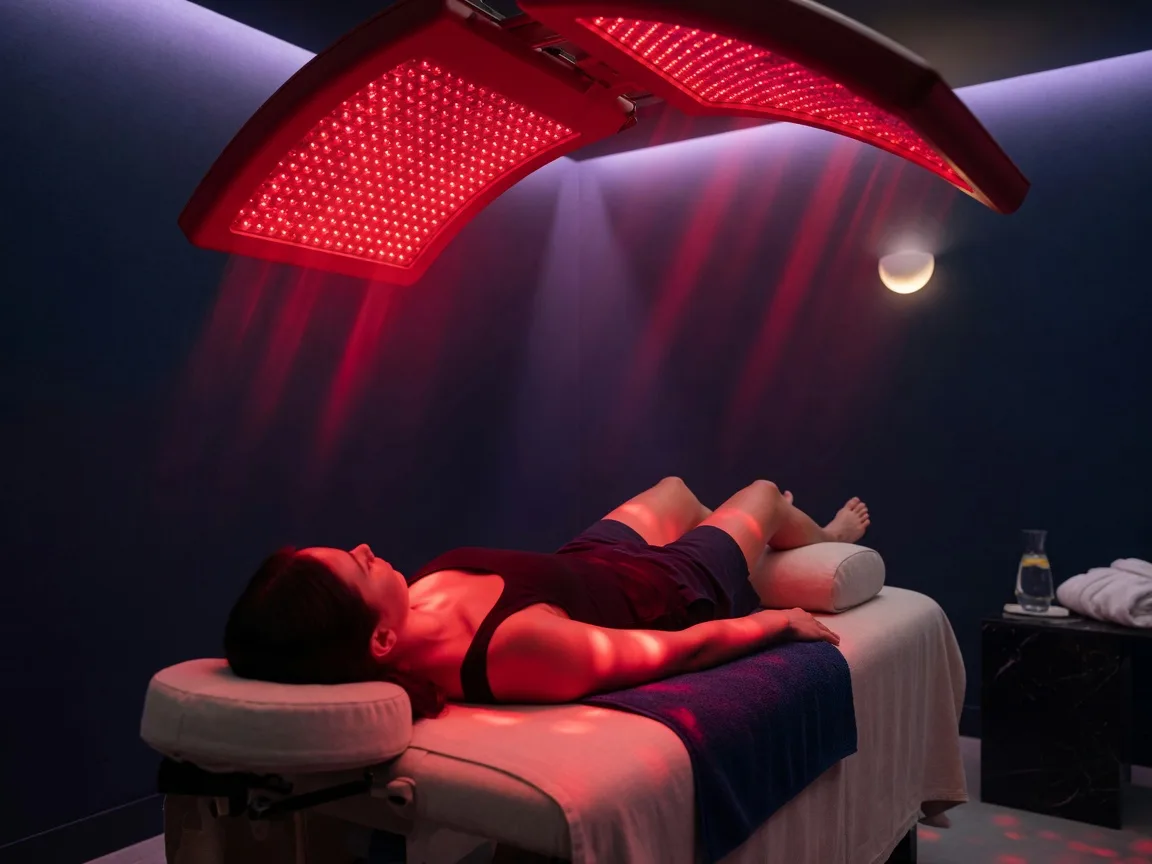
Red light therapy (photobiomodulation) uses specific red and near-infrared wavelengths that cells absorb to support their own energy production, and the clinical evidence is real but modest: review-level support for reduced muscle soreness after exercise and reduced pain and disability in knee osteoarthritis, with results that build gradually over a consistent schedule rather than overnight.
Key Points
- Red (~630-660 nm) and near-infrared (~810-850 nm) wavelengths
- Absorbed by mitochondria, supporting cellular energy production
- Meta-analyses find reduced muscle soreness after exercise
- Strongest joint evidence: knee osteoarthritis pain and disability
- Effects are gradual, dose-dependent and adjunctive
What the Wavelengths Actually Do
Red and near-infrared light penetrate tissue and are absorbed mainly by cytochrome c oxidase, an enzyme at the heart of mitochondrial energy production, with absorption peaks around 660 and 810 to 830 nanometers. More efficient energy production is the biological story behind every red light claim.
The response is dose-dependent: too little light does little, and more is not automatically better. That is why a real clinic calibrates devices and schedules instead of selling intensity.
What the Evidence Supports
For muscle recovery, a 2017 meta-analysis of 18 randomized trials reported roughly 43% less delayed-onset muscle soreness with red and near-infrared treatment compared with placebo, and more recent reviews continue to find reduced markers of muscle damage. For joints, a 2019 systematic review concluded light therapy reduces pain and disability in knee osteoarthritis, and a 2025 randomized trial using clinically recommended dosing found significant pain reduction versus placebo.
For skin, randomized studies using 660 nanometer red light have documented meaningful improvements in wrinkle appearance over multiple sessions. Each of these effects is moderate, cumulative and best used as part of a broader plan.
Realistic Expectations
Expect gradual improvements over weeks of consistent sessions, not a single dramatic fix. Clinical trials typically used multiple sessions per week for a month or more. Light therapy is adjunctive: it complements exercise, physical therapy and good nutrition, it does not replace them.
Marketing claims for consumer devices often outpace the evidence. Clinic-grade panels with appropriate power and a consistent schedule are the realistic setting for measurable results.
How Thrive Uses Red Light
At Thrive EECP in Draper, red light sessions are built into individualized recovery, weight loss and wellness programs, often alongside compression, vibration, EECP and hyperbaric oxygen. The selection and schedule are based on your goals and the evidence, not a menu of add-ons.
Sources & References
Independent, authoritative sources used in this article, linked so you can verify the details yourself. Information here is educational and not a substitute for medical advice.
Want to Explore This Further?
This article is part of the Thrive EECP Health Library in Draper, Utah. If the topic above sounds relevant to you, the next step is a free, no-pressure conversation about your goals.
About the Author
This article was authored and curated by Phil Kim for the Thrive EECP Health Library, with content guidance from the Thrive team. It is educational information, not medical advice, and does not create a patient relationship. Always consult a qualified healthcare professional about your health.